
Co-Creating the Future of Citizen Science at the CS Barcelona Congress
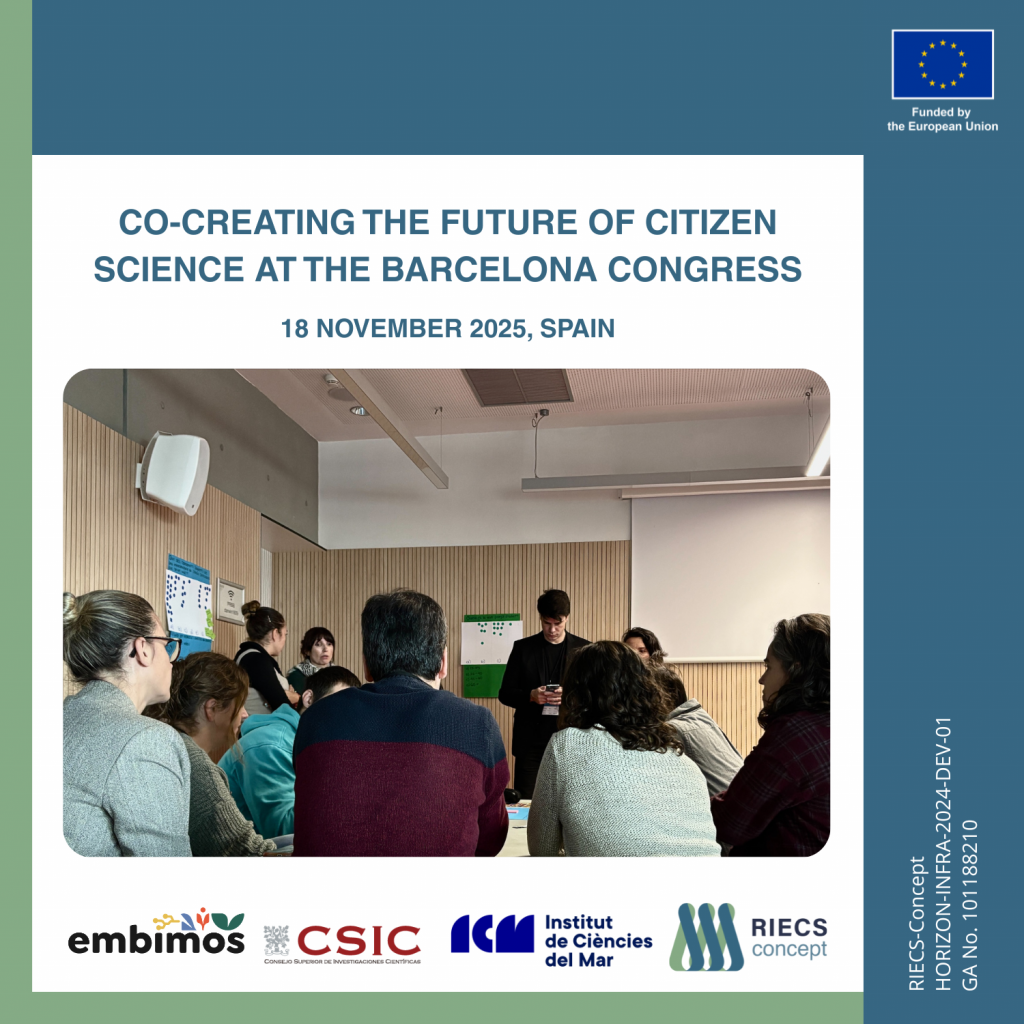
📢 On 18 November, the RIECS-Concept participated in the II Citizen Science Congress in Barcelona, hosting an engaging co-creation workshop that gathered more than 20 participants from the local and European citizen science landscape❗
📌Led by the EMBIMOS ICM-CSIC team, the session brought together researchers, educators, citizen scientists, NGO representatives, and project managers, who shared an interest in contributing to the design of the future European Research Infrastructure for Citizen Science.
A Collaborative Space for Identifying Needs and Solutions
✳️ The workshop invited participants to reflect on the challenges and opportunities ahead for citizen science in Europe.
✳️ Through hands-on group activities, they:
⚫ Prioritised key needs and expectations for future infrastructure.
⚫ Contributed new ideas and missing components.
⚫ Share their experiences and pain points.
⚫ Developed a collective understanding of the services that a European-level infrastructure should offer.
📌 This collaborative dynamic helped surface a wide range of user stories – revealing diverse requirements from different corners of the community and highlighting the importance of building an inclusive infrastructure.
Voices from the Community
✳️ The session also served as a platform for participants to connect, exchange experiences, and envision a stronger, more coordinated citizen science ecosystem.
✅ “We are here to find inspiring experiences to develop our own citizen science projects. Knowing that Europe is investing in a common infrastructure gives us hope for having a shared space that integrates different visions and enables projects to move forward.” – Martí Badal, science communicator at the Josep Carreras Leukaemia Research Institute.
✨ For many, the workshop was not just a planning exercise but an opportunity to strengthen community bonds ✨
✅ “I came to understand how the citizen science ecosystem works here and to build new collaborations. In my team, we often wonder which common infrastructure we can rely on and seeing that a project is working on this is incredibly reassuring.” – Alicia, Muséum d’Histoire Naturelle, Paris.
📌 Others underlined the practical need to make citizen-generated data more useful and interpretable:
✅ “There are many shared challenges, and it is good to see that the solution is being built collectively.” – Francisca Guerola, Associació Hàbitats.

Showcasing the RIECS-Concept Vision at the Congress
✳️ Beyond the workshop, RIECS-Concept was also visible through two key presentations:
Jaume Piera delivered “Towards an Open Infrastructure for European Citizen Science”, providing a clear overview of the project’s objectives and its relevance for the broader European research landscape.
Karen Soacha-Godoy presented insights from the project’s research in the talk “Citizen Observatories: research infrastructures for action”, highlighting how citizen observatories contribute to debates around data, participation, and knowledge production.
✳️ These contributions helped reinforce the importance of coordinated infrastructures, shared services, and long-term support systems for sustaining citizen science initiatives across Europe.

A Collective Effort Moving Forward
✳️ The activities in Barcelona demonstrated a clear message: building a European Research Infrastructure for Citizen Science is not just a technical challenge, it’s a collective, community-driven process.
✳️ By involving practitioners, researchers, and engaged citizens early on, RIECS-Concept aims to ensure that the future infrastructure is grounded in real-world needs, fosters collaboration, and empowers diverse actors across Europe.
✨ The conversations during the congress offered an opportunity to exchange ideas and marked an important step in RIECS-Concept’s work to gather community input, promote shared learning co-creation at every stage ✨
Published 2025-12-03