
Different Perspectives, One Shared Challenge: Voices from the RIECS-Concept Summit 2026
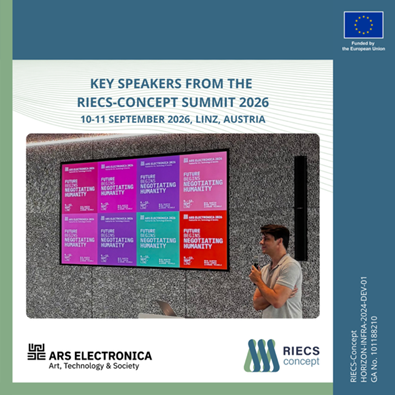
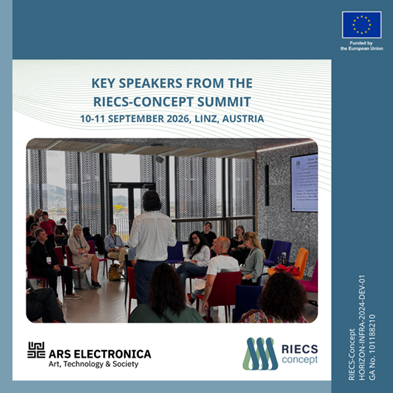
✳️ During the RIECS-Concept Summit: Designing the Future of Citizen Science Infrastructure, held on 10-11 September 2026 in Linz, Austria, invited experts and participants brought experience from Citizen Science practice, research infrastructure, Community Science, research ethics and integrity, research data, science communication, public engagement, policy and public technology.
✳️ Together, these perspectives helped explore not only what a future infrastructure could provide, but what would make it useful, trusted and sustainable for the communities it is intended to serve.

Voices from the Summit
📌 Andrea Sforzi (Italy), Director of the Maremma Natural History Museum, ECSA co-founder and President of Citizen Science Italia, brought extensive experience from Citizen Science practice, networks, evaluation and science communication.
📌 Dr Reda Cimmperman (Lithuania), Ombudsperson for Academic Ethics and Procedures of the Republic of Lithuania, contributed a perspective on research integrity, ethics and responsible research, highlighting their importance alongside the technical development of future infrastructure.
📌 Dr Christine Marizzi (Austria) leads the Community Science research group at the Ludwig Boltzmann Institute for Science Outreach and Pandemic Preparedness at the Medical University of Vienna. Brings experience connecting research with community participation and public engagement.
📌 Sandra Zänkert (Germany) works with Base4NFDI, Germany’s national initiative for cross-disciplinary research data infrastructure services. Her work addresses questions of governance, evaluation and the long-term sustainability of shared research data services.
📌 Tim Kiessling (Germany) brings practical experience of collaborative research involving young people, including his previous work with Plastic Pirates. His current work focuses on youth participation and the factors that contribute to successful collaborative research in Opaki.
📌 Dobrivoje Lale Eric (Serbia) represents science communication and research policy from the Centre for the Promotion of Science, and contributed as a moderator and programme developer, facilitating discussions and bringing together perspectives on science communication, STEAM, research policy and international cooperation. His role helped connect diverse contributions and support dialogue on the future of citizen science research infrastructures.
📌 Teije Terhorst (Netherlands), Head of New Business at Waag Futurelab, contributes a Public Technology perspective, connecting technological development with social innovation and questions about how technologies can better serve society.
📌 Dr Nicola Vuolo (Italy) works at the intersection of environmental research, Citizen Science, public engagement and data analysis. At CNR-IBE, he leads public engagement activities for LTER-Italy and contributes Citizen Science expertise to the Horizon Europe project OutBE.
📌 Dr John Terenzini (United States) highlighted an important tension between “expressed demand” and “architectural necessity.” Among the practical needs emerging from Citizen Science communities, he emphasised funding, training and connection to people, reminding the discussion that technical infrastructure also needs to respond to what its users need.
📌 Ingrid Garschall (Austria) presented the citizen science project “United by Crisis” (2022-2025), highlighting how archaeologists, local enthusiasts and collectors collaborated to explore Neolithic sites near Asparn/Schletz. Through field surveys, mapping discoveries and documenting archaeological finds, the project demonstrated how citizens can actively contribute to scientific research and the preservation of cultural heritage.
📌 Andrea Giraldo Sevilla highlighted the importance of participatory approaches in citizen science, drawing on her international experience in research, open data and capacity building. Through her work on the co-development of CitSci Comp, she emphasised the role of participants as active co-creators of their learning pathways and the importance of integrating FAIR and CARE principles into data management and research practices.
📌 Stefania Oikonomou (Web2Learn) focused on how digital technologies can enable different forms of civic engagement, from digital activism and advocacy to citizen science. Drawing on her experience designing and delivering training activities with underrepresented communities, including Deaf people and refugees, she highlighted the importance of adapting engagement approaches to different communities’ needs and enabling their active participation in research.
📌 Margaret Gold (Netherlands), Coordinator of the Citizen Science Lab at Leiden University and co-lead of the national Citizen Science Nederland network, brought a perspective on connecting citizen science initiatives across institutions and communities. Her work highlights the importance of collaboration, knowledge exchange and coordinated networks in strengthening the citizen science ecosystem and supporting its long-term development.
📌 Birgit Sattler (Austria) is a limnologist and microbial ecologist at the University of Innsbruck and Director of the Austrian Polar Research Institute. Her research focuses on microbial life in alpine and polar environments, the cryosphere, climate change and anthropogenic pollution.
📌 Slava Tykhonov (France), Head of Interoperability Artificial Intelligence (CODATA), brought a technical perspective on research infrastructures, drawing on over 25 years of experience in software development, research and innovation.
📌 Oliver Stummer (Austria) brought the direct perspective of a citizen scientist through his participation in the archaeological project United by Crisis.
📌 Kat Austen (UK/Germany), artist and researcher, brought another dimension through her Inspiration Talk, highlighting citizens as holders of knowledge and the importance of agency in research:
“People are full of knowledge, regardless of the institutional and social clothing that they assume.”

What Did These Perspectives Bring to the Discussion?
✳️ Across the different contributions, several messages connected the discussions:
📌 Infrastructure is more than technology. Governance, ethics, trust, participation and sustainability are part of the same challenge.
📌 Citizens are more than data contributors. Their knowledge, experience and agency need to be recognised in the way future infrastructure is designed.
📌 Technical requirements and community needs must meet. A strong architecture needs to be accompanied by practical value for the people expected to use it.
✅The diversity of perspectives at the Summit demonstrated why a future European Research Infrastructure for Citizen Science cannot be designed from a single point of view.
✨ As RIECS-Concept moves into its second and final phase, these different perspectives will help inform the development of a roadmap that connects technical possibilities with the needs of citizens, researchers, communities and institutions ✨
Published 2026-10-14