
From Vision to Roadmap: Shaping the Future of Citizen Science Infrastructure
❓ What should a European Research Infrastructure for Citizen Science make possible by 2036, and what needs to happen to get there?
✳️ This question was at the centre of the From Vision to Roadmap workshop, held on 11 September 2026 during the second day of the RIECS-Concept Summit: Designing the Future of Citizen Science Infrastructure in Linz, Austria.
✳️ The three-hour workshop looked beyond the immediate lifetime of RIECS-Concept to develop a shared long-term vision and, importantly, identify the barriers, actions and priorities that need to be considered on the way towards it.

Key Outcomes from the Workshop
Several priorities emerged for the future development of European Citizen Science infrastructure:
📌 Connect existing resources. The challenge is not simply to build something new. Existing platforms, services, data sources and communities need to work together more effectively, making interoperability and stronger connections across the ecosystem essential.
📌 Build governance and trust alongside technology. Technical interoperability alone is not enough. Long-term cooperation also requires appropriate governance, clear roles and responsibilities, and trusted relationships between organisations and communities.
📌 Design for change. An infrastructure intended for the future cannot assume that Citizen Science, technology or stakeholder needs will remain unchanged. Adaptability and long-term sustainability therefore need to be considered from the beginning.
📌 Look beyond the Citizen Science community. External perspectives and independent feedback are important for challenging assumptions and ensuring that future infrastructure remains relevant beyond the immediate Citizen Science ecosystem.
📌 Explain why the infrastructure matters. A technically strong infrastructure also needs a clear narrative about why it exists, who it serves and what value it creates, particularly when engaging institutions, policymakers, funders and future users.

Starting with a Shared Vision for 2036
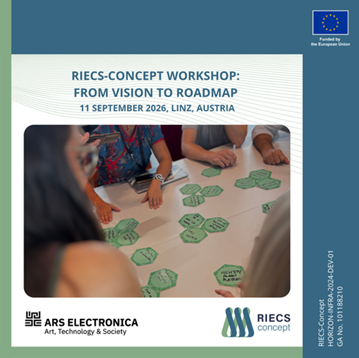
✳️ To identify these priorities, participants were first invited to imagine what a mature European Research Infrastructure for Citizen Science should make possible by 2036.
✳️ The exercise deliberately created distance from the immediate limitations of the current project. Participants could think about the longer-term needs of citizens, researchers, communities and other stakeholders before considering what would be required to make that vision achievable.
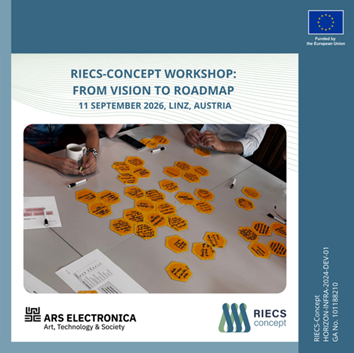
⚫️ The process was based on co-design, with ideas developed individually and collectively and then connected into shared maps.
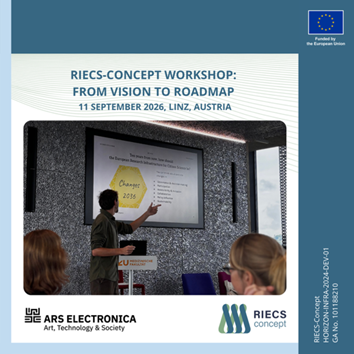
📌 As the workshop facilitator explained: “The result is everyone’s result, not just one person.”
✨ This created a shared vision rather than a collection of individual proposals, providing a common starting point for the next stages of the roadmapping process.

From Vision to Barriers
✳️ The next step was to test that vision against reality. Participants identified factors that could prevent the future infrastructure from reaching its potential. Interoperability, governance, trust and adaptability were among the recurring themes.
✳️ Citizen Science already has platforms, data sources, communities and services across Europe. The challenge is therefore not only whether new solutions are needed, but also how existing resources can work together more effectively.
✳️ The discussion also showed that technical solutions alone cannot address this challenge. Organisations and communities need governance mechanisms, clear responsibilities and relationships that support long-term cooperation.
✳️ At the same time, the infrastructure needs to remain adaptable. What works today may not reflect the technologies, practices and community needs of 2036.
Turning Barriers into Actions
✳️ Identifying barriers was followed by the most practical part of the process: considering what needs to happen to address them.
✳️ The workshop followed a clear sequence: Vision → Barriers → Actions → Priorities
✳️ This helped translate broad ambitions into areas that can inform future decisions. Discussions pointed towards strengthening connections between existing resources, developing appropriate governance mechanisms, supporting trust between organisations and communities, building adaptability into infrastructure design and bringing external perspectives into its development.
✨ Communication also emerged as part of the challenge. A future European Research Infrastructure needs not only a strong technical foundation, but also a convincing explanation of its purpose, its users and the value it can create.
💭 As the facilitator summarised the purpose of the exercise: “We want to create a roadmap to know how we can get there.”

From a Ten-Year Vision to the RIECS-Concept Roadmap
✳️ The 2036 perspective created space for ambition, but the purpose of the workshop was ultimately practical.
✳️ The project is not expected to build the full infrastructure envisioned for 2036. Its task is to develop a realistic and actionable roadmap that identifies what needs to happen, where existing resources can be strengthened, where new solutions may be required and which priorities should guide future development.
✨ The From Vision to Roadmap workshop therefore connected long-term ambition with concrete planning: defining where European Citizen Science infrastructure should be heading, identifying what stands in the way and translating those challenges into actions and priorities for the RIECS-Concept roadmap.
Published 2026-10-21

This project has received funding from the European Union’s research and innovation programme Horizon Europe under the grant agreement No. 101188210