
Citizen Engagement in Climate Policymaking: Insights Feeding into the RIECS-Concept Vision
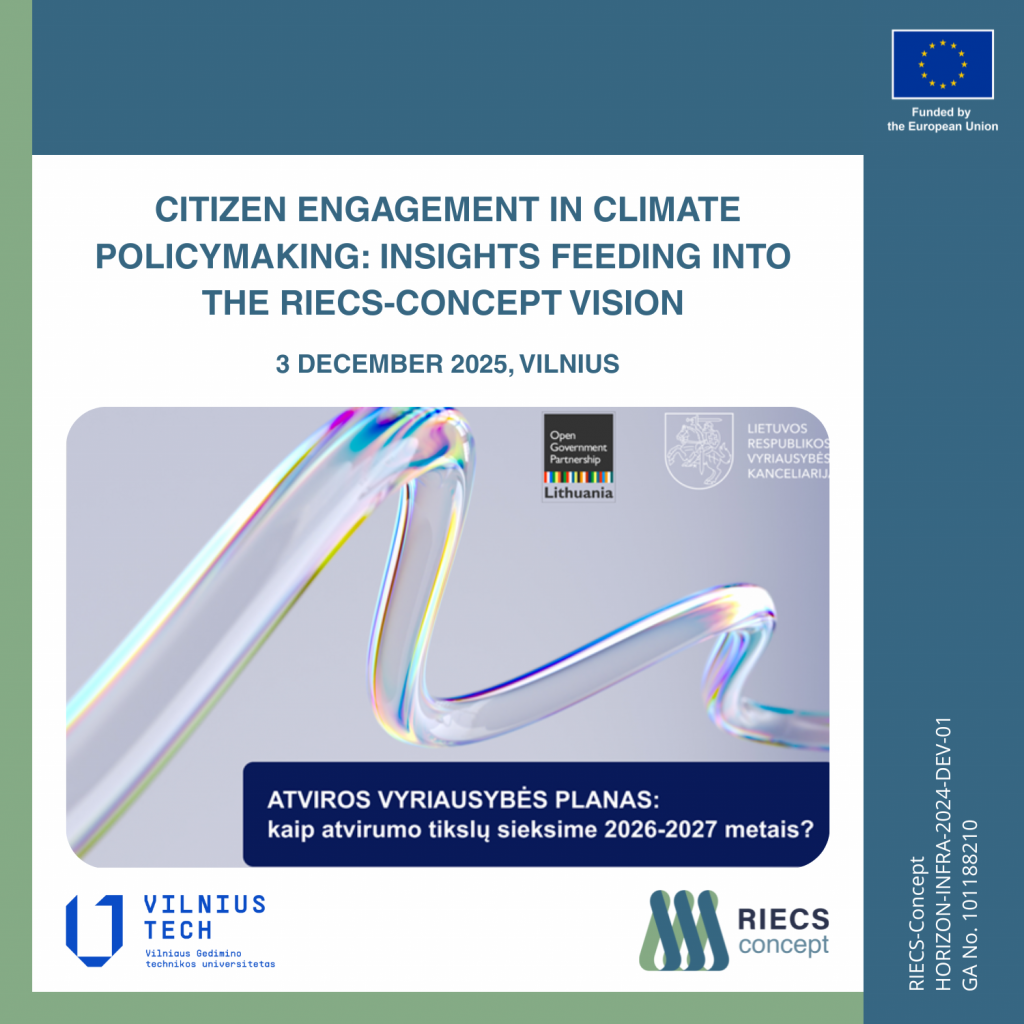
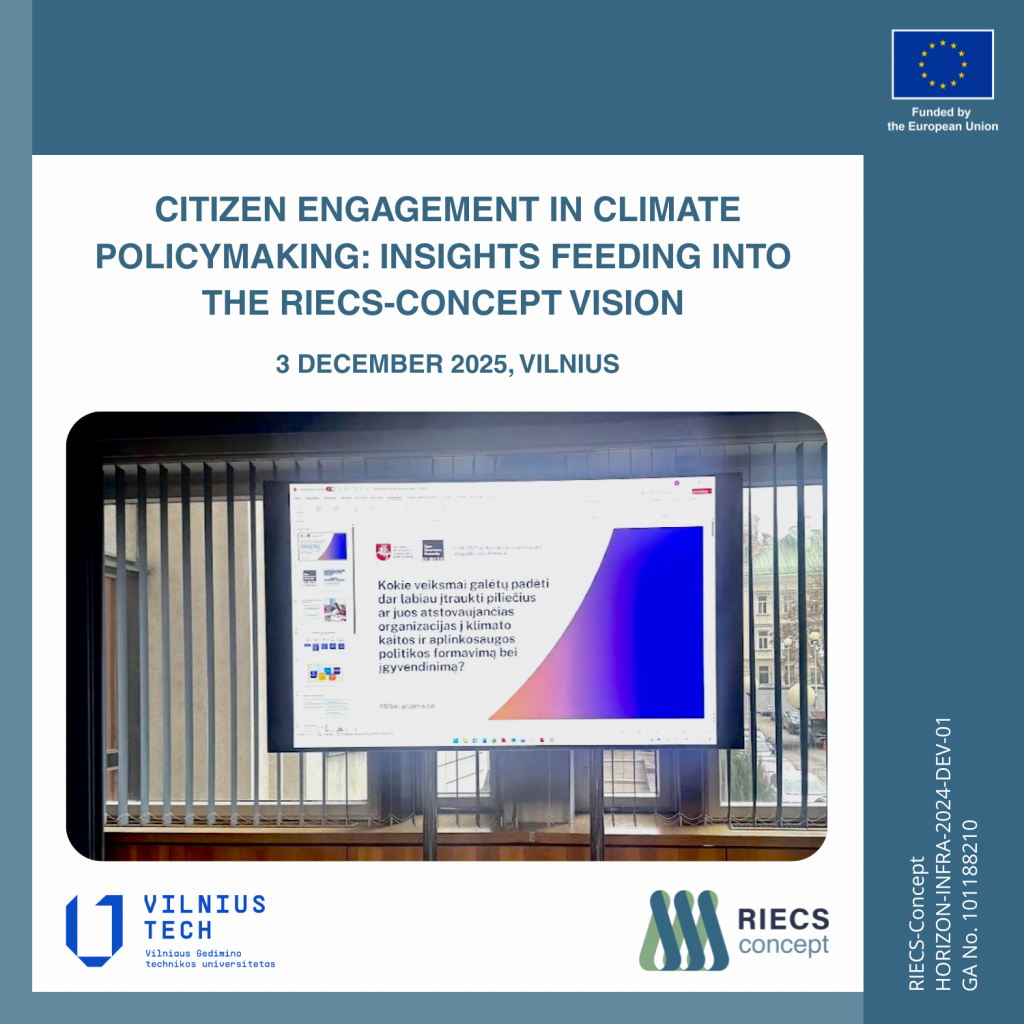
📅 On 3 December, Monika Mačiulienė (VILNIUS TECH, RIECS-Concept) participated in an ideas workshop hosted at the Office of the Government of Lithuania.
✳️ The session, titled “What actions could help further involve citizens and the organisations representing them in shaping and implementing climate and environmental policy?”, forms part of the national preparation of the 2026–2027 Open Government Action Plan.
✅ For RIECS-Concept, this workshop offers meaningful insights into how institutional contexts are evolving to support wider public engagement in scientific and policy processes. Climate governance, in particular, is emerging as a key domain where structured, evidence-based citizen participation is urgently needed.

Why This National Consultation Matters for Citizen Science?
✅ The workshop brought together participants from public administration, civil society, and academia. Organisers outlined the purpose of the upcoming Action Plan: to strengthen participation, openness, and accountability in public governance. Climate and environmental policy have become central priorities, reflecting the need for collaborative decision-making approaches grounded in public involvement.
📌 Participants discussed:
⚫ The current state of citizen engagement in Lithuania.
⚫ Institutional practices and existing participation mechanisms.
⚫ Persistent barriers faced by communities.
⚫ Cultural and structural changes needed to improve engagement.
✳️ This aligns closely with the RIECS-Concept mission to identify how countries across Europe can embed Citizen Science principles, such as openness, collaboration, and co-creation, into national and international research and policy systems.

Co-Creating Actions for Better Engagement
During the collaborative part of the workshop, participants explored potential actions that public authorities and civil society organisations can take to broaden involvement.
📌 Common priorities included:
⚫ Designing more accessible and inclusive participation formats.
⚫ Improving communication about decision-making processes.
⚫ Building stronger feedback mechanisms so communities can clearly see how their contributions are used.
⚫ Supporting evidence-informed engagement models that foster trust between institutions and society.
✨ Monika’s contribution reinforced the value of data-driven insights and methodological tools – key components of what a Research Infrastructure for Citizen Science can provide at scale.

Implications for RIECS-Concept and the Future of Citizen Science in Europe
The insights generated in this workshop will inform Lithuania’s upcoming Open Government Action Plan and contribute to a broader European movement toward more participatory, transparent governance.
For RIECS-Concept, this consultation serves as a real-world example of:
⚫ How can Citizen Science approaches strengthen climate governance?
⚫ Why are structured, research-informed engagement infrastructures needed?
⚫ The growing demand for tools, standards, and shared knowledge to support citizen participation.
✨ As the RIECS-Concept project works toward designing a pan-European Citizen Science infrastructure, national developments such as these underscore both the relevance and urgency of building robust systems that help governments, researchers, and citizens collaborate more effectively ✨
Published 2025-12-10