Designing the Future of Citizen Science Infrastructure: Inside the RIECS-Concept Summit 2026
❓ What should a future European Research Infrastructure for Citizen Science provide? And how can it strengthen an already growing ecosystem without creating another layer of fragmentation?
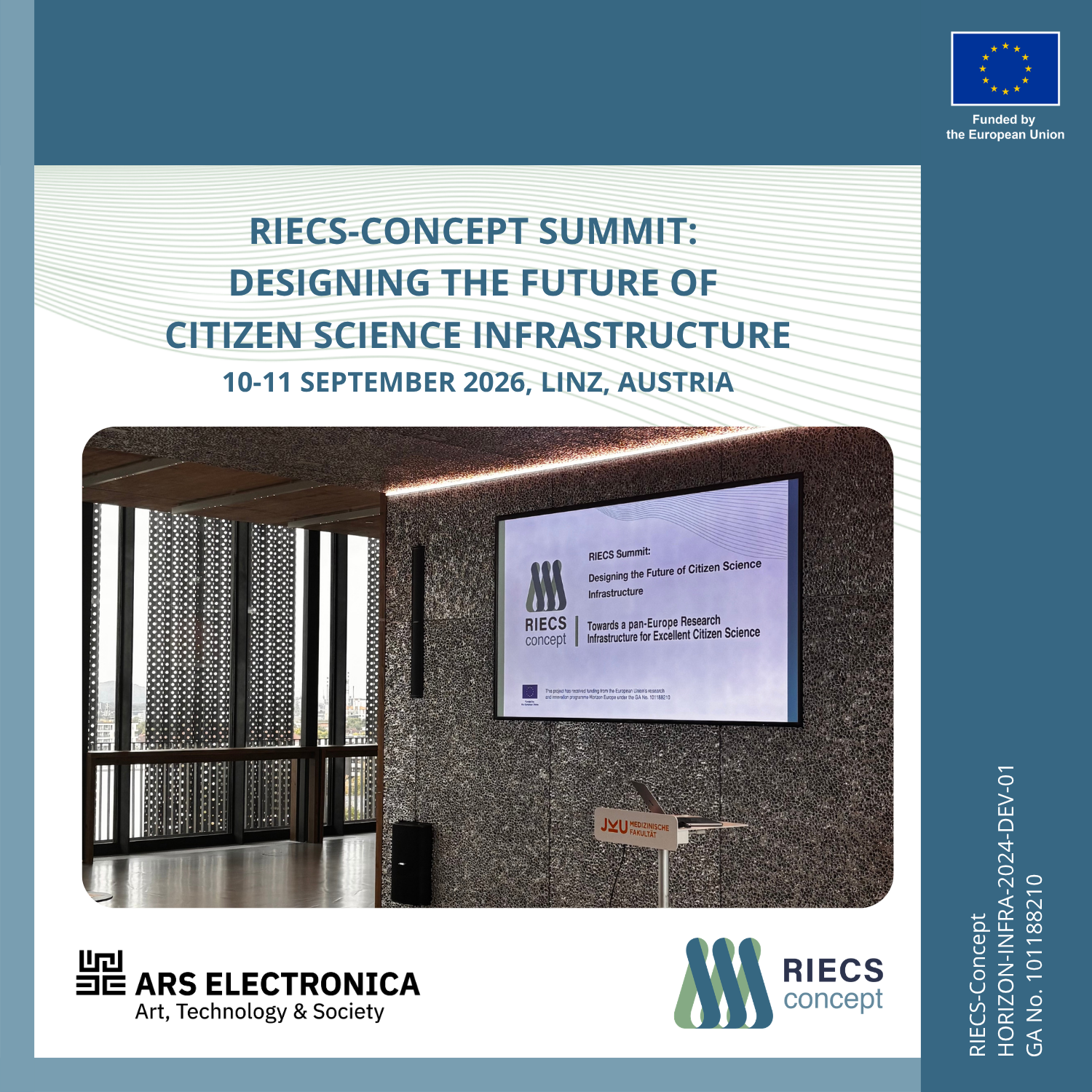
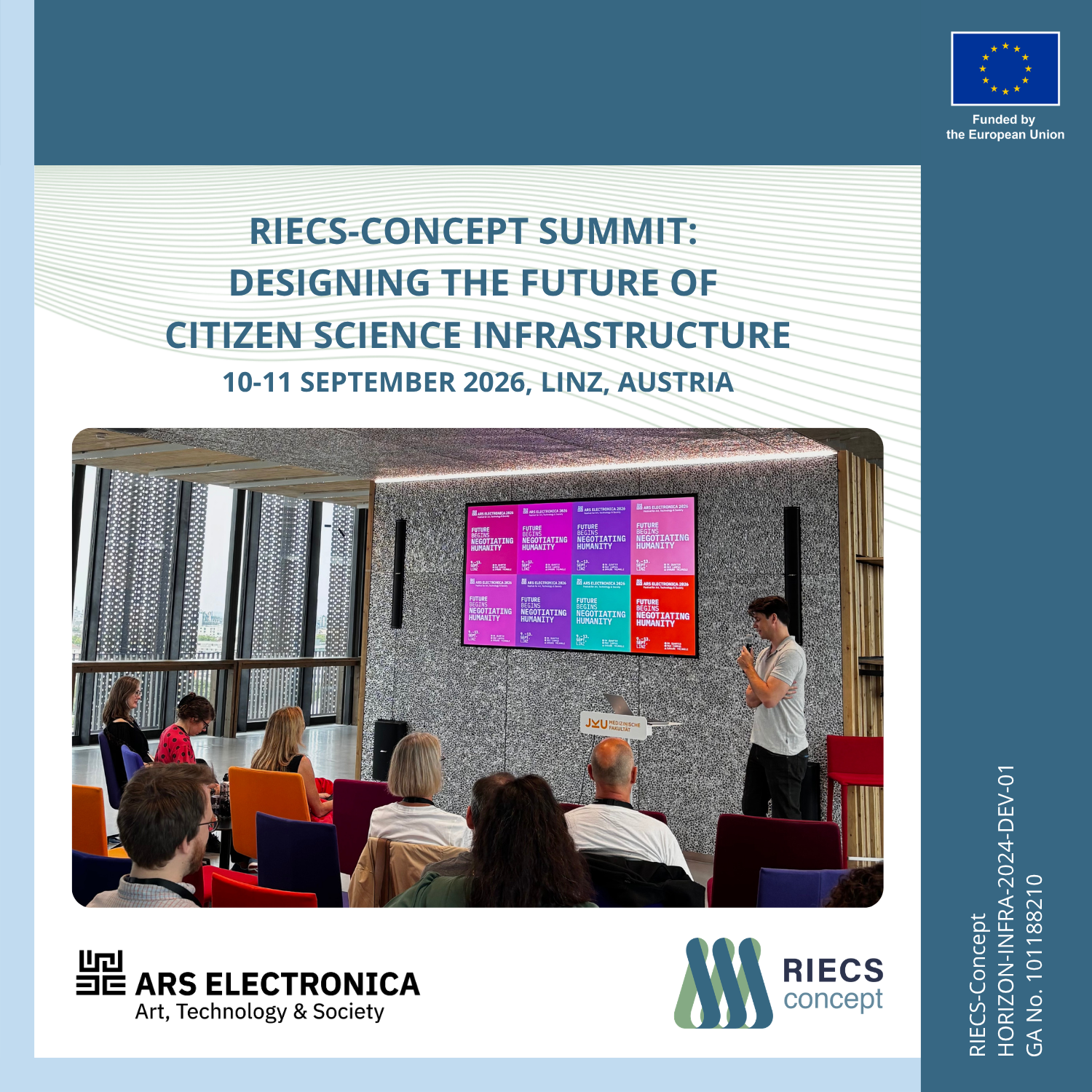
✳️ These questions were at the centre of the RIECS-Concept Summit: Designing the Future of Citizen Science Infrastructure, held on 10-11 September 2026 at JKU MED Campus in Linz, Austria, in the context of Ars Electronica Festival 2026.
✳️ With the first phase of RIECS-Concept completed, partners, external associates and invited stakeholders came together to translate the evidence gathered so far into shared priorities and concrete directions for the project’s second and final phase.

Key Outcomes from the RIECS-Concept Summit
Across stakeholder discussions, cross-group dialogue, workshops and joint alignment activities, five key messages emerged:
📌 Connect rather than duplicate:
A future RIECS-Concept Research Infrastructure should connect, federate and strengthen existing resources, addressing genuine gaps rather than creating another standalone platform.
📌 Design around citizens and communities:
Citizens should not be treated only as data contributors. They can also be users of infrastructure services and resources, while their knowledge and experience should inform its design.
📌 Move from participation to meaningful engagement:
Participation does not end when data are submitted. Recognition, feedback, access to results and understanding how contributions are used are important parts of long-term engagement.
📌 Align technical possibilities with community needs:
Infrastructure is more than technology. Governance, ethics, trust, training, accessibility, recognition and sustainability need to develop alongside its technical architecture.
📌 Turn shared priorities into action. The Summit moved from identifying needs towards asking what needs to happen, what barriers need to be addressed, and which actions should be prioritised, creating a direct bridge towards the final RIECS-Concept roadmap.

How Did the Summit Get There?
✳️ These outcomes were not produced through a single discussion. The Summit was designed as a two-day collaborative process, connecting evidence from the first phase of RIECS-Concept with the experience of different stakeholder groups.
✳️ Dedicated working sessions allowed participants to explore specific challenges and perspectives. Cross-group discussions brought those perspectives together, while joint alignment activities helped identify common ground and shared priorities. The process then moved towards potential infrastructure services, long-term vision, feasibility and concrete actions.
Evidence as the Starting Point
✳️ The process began with evidence already gathered during the first phase of RIECS-Concept.
✅ Among the results presented in Linz were 378 user stories, representing more than 1,000 hours of participant contribution, subsequently consolidated into 37 distinct needs. These covered discovering projects and collaborators, training and support, data and knowledge management, recognition and what happens after participation.
✅ Participants were deliberately asked to approach the first major discussion as citizens first and experts second. This helped test the Phase 1 findings against their own experiences and brought particular attention to what happens before, during and after participation.
✳️ Do citizens know where to find opportunities? Do they receive appropriate training? Are their contributions recognised? Can they understand what happens to their data and whether their work makes a difference?
✨ These discussions reinforced the principle that citizens should be recognised not simply as data collectors, but as knowledge holders, contributors and potential users of the infrastructure itself. ✨

Testing What a Future Infrastructure Could Provide
✳️ The next step was to translate identified needs into questions about infrastructure. During Impact in Practice workshop, participants examined scientific, societal, economic and environmental dimensions of impact, with participation considered across all four.
📍 One important distinction emerged: outputs are not the same as impact. Numbers of participants, observations or publications demonstrate activity, but they do not fully explain what changed because people participated.
✳️ The Towards Common European Infrastructure session then tested potential services and requirements through discussion and debate. Participants considered data governance, access to Citizen Science data, training, recognition, accessibility and discoverability.
✨ This stage exposed some of the tensions that a future infrastructure will need to resolve. Better access to Citizen Science data could create value, for example, but another separate database could also increase fragmentation. Open access is important, but it needs to be balanced with responsible governance and the protection of sensitive information.
💭 These discussions led to one of the strongest conclusions of the Summit:
“The future infrastructure should connect, federate and strengthen what already exists rather than reproduce the fragmentation it is intended to solve.”
Turning a Long-Term Vision into Priorities
✳️ With needs and potential infrastructure directions on the table, the second day shifted towards the longer term.
✳️ During the From Vision to Roadmap workshop, participants imagined what a European Research Infrastructure for Citizen Science should make possible by 2036.
✅ They then worked backwards through four stages:
Vision → Barriers → Actions → Priorities
✳️ This helped move the discussion beyond aspirations towards the practical conditions required to achieve them. Interoperability, governance, trust, adaptability and long-term sustainability emerged alongside the need for a clear narrative explaining why the infrastructure matters.
✳️ The following foresight discussion tested these ideas against feasibility, sustainability and policy alignment.
✳️ It also highlighted the need to reconcile architectural necessity with expressed community demand. A future infrastructure requires technical and institutional foundations, but it also needs to respond to practical needs such as funding, training and connection to people.
💭 As Fermín Serrano summarised:
“First alignment, and second, refinement… we need arguments.“

What Comes Next?
✳️ The final Horizons and Perspectives session brought the process together, asking participants what RIECS-Concept should take forward, what should change and what the project should aspire to achieve.
✨ The Summit therefore did more than collect another set of stakeholder opinions. It connected evidence from Phase 1 with cross-stakeholder dialogue, tested potential infrastructure directions and translated a long-term vision into priorities that can inform the next stage of RIECS-Concept. ✨
Published 2026-10-07